
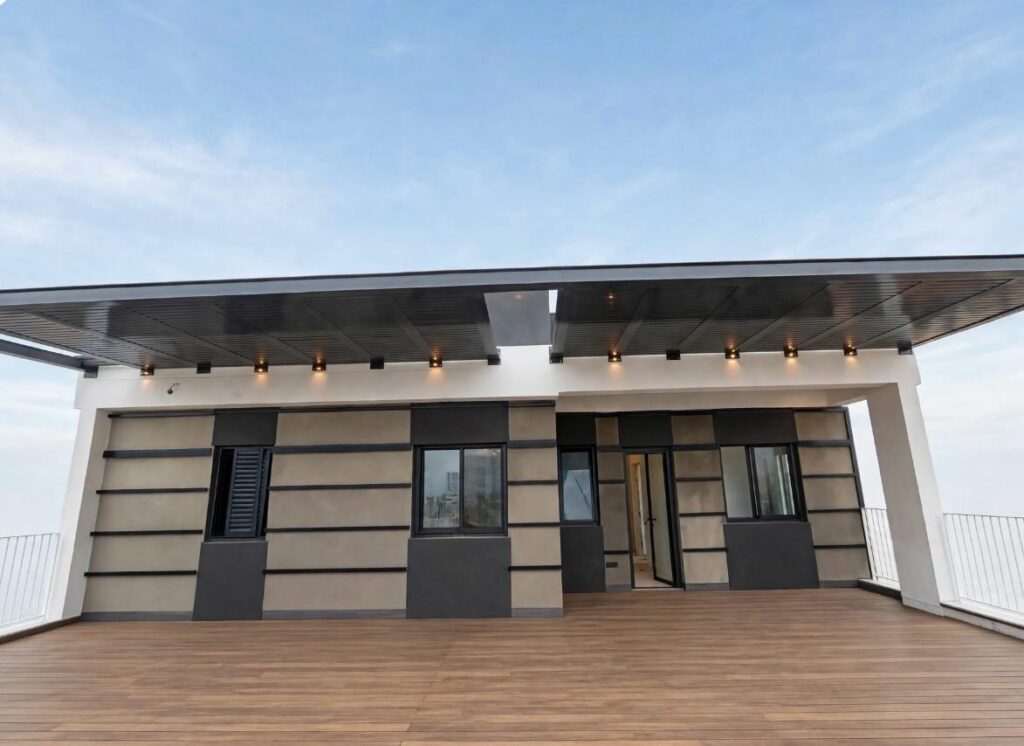
A deck in South Florida works hard. It sits in strong sun for most of the year, gets soaked by afternoon storms, and for many homes it lives right next to a pool or close to salt air. The material you choose decides how the deck looks after a few years, how hot it feels under bare feet, and how much of your weekend goes into maintenance. This guide compares the main options for homeowners in Hollywood and the rest of the region.
What to think about before you pick a material
- Sun and heat. Darker boards get hotter. Some materials hold heat more than others, which matters around a pool where people walk barefoot.
- Moisture. Rain, sprinklers and pool splash keep the deck wet for long periods. Water trapped against wood is what causes rot.
- Salt and chlorine. Coastal air and pool water are hard on fasteners, railings and some finishes.
- Insects. Termites are active all year in our climate.
- Storms. The deck frame, railings and anything attached to the house must be built to code, and many projects need a permit.
- Maintenance. Be honest about how much cleaning, sealing and repair you want to do.
Pressure treated wood
Pressure treated pine is the traditional budget choice and is often used for the framing under other decking materials.
- Pros: lower upfront cost, widely available, easy to work with.
- Cons: it can check, crack, warp and splinter as it goes through wet and dry cycles. It needs regular cleaning and sealing in our sun, and its looks fade quickly without care.
- Best for: homeowners on a tight budget who do not mind regular upkeep.
Tropical hardwoods such as Ipe
Dense hardwoods like Ipe are known for strength and natural resistance to rot and insects.
- Pros: beautiful rich color, very hard and durable, naturally resistant to decay.
- Cons: higher cost, heavy and hard to cut, and it needs oiling if you want to keep the original color. Without oil it weathers to a silver gray. Ask about responsible sourcing.
- Best for: homeowners who want real wood and accept the cost and care that come with it.
Composite decking
Composite boards are made from a blend of wood fibers and plastic. Most modern products are “capped”, meaning a tough plastic shell protects the core.
- Pros: no sanding, staining or sealing, resists rot and insects, available in many colors and wood grain looks, and usually comes with a manufacturer warranty.
- Cons: higher upfront cost than treated wood, and some boards, especially darker colors, can get hot in direct sun. Boards expand and contract with temperature, so spacing and installation details matter.
- Best for: families who want a wood look with low maintenance.
PVC decking
PVC boards contain no wood fibers at all.
- Pros: very resistant to moisture, mold and stains, light weight, and many products are designed to stay cooler than some composites. A strong option around pools and near water.
- Cons: often priced higher, and like composite it moves with temperature changes.
- Best for: pool decks, docks and waterfront homes.
Aluminum decking and aluminum framing
Aluminum can be used for the deck boards, for the frame under the boards, or both.
- Pros: will not rot, warp or attract termites, and an aluminum frame stays straight for the life of the deck. Powder coated aluminum boards can be very low maintenance.
- Cons: a more specialized product with a higher cost, and the look is more modern than wood.
- Best for: rooftop decks, elevated decks and homeowners who want the longest lasting structure.
Quick comparison
| Material | Maintenance | Rot and insects | Upfront cost |
|---|---|---|---|
| Pressure treated wood | High | Can be affected over time | Lower |
| Ipe hardwood | Medium, oil to keep color | Naturally resistant | Higher |
| Capped composite | Low | Resistant | Medium to higher |
| PVC | Low | Resistant | Higher |
| Aluminum | Very low | Not affected | Higher |
The parts people forget: frame, fasteners and railings
The boards are what you see, but the frame and hardware decide how long the deck lasts.
- Framing. A beautiful composite surface on a weak wood frame can still fail. Ask what the frame is made of and how it is protected from moisture.
- Fasteners. Near salt air and pools, stainless steel screws and hidden clip systems hold up much better than standard coated screws.
- Drainage and airflow. Boards need proper gaps and the frame needs airflow so water can drain and dry.
- Railings. Aluminum, glass and cable railings are popular because they resist corrosion and keep the view open. Railings must meet height and strength rules in the building code.
Adding shade to your deck
In South Florida, a deck without shade can be too hot to use at midday. Many homeowners pair a new deck with an aluminum pergola or gazebo. If that is your plan, design the two together so the deck frame and footings are ready to support the posts and anchors the engineer specifies. Read more in our guides on aluminum vs wood pergolas in Florida and permits and wind load in Broward County.
How to decide
- Pick your maintenance level first. It narrows the list quickly.
- Think about bare feet. Around a pool, ask for samples and leave them in the sun.
- Consider the location: ground level, elevated, rooftop or waterfront.
- Look at the whole system, frame, fasteners and railings, not only the boards.
- Plan shade and lighting at the same time as the deck.
Talk to Meyers Outdoor
Meyers Outdoor builds custom decks, aluminum pergolas and aluminum fences for homes in Hollywood and across South Florida. Contact us or call (754) 209-3024 to talk through materials for your space and get a free on site estimate.